
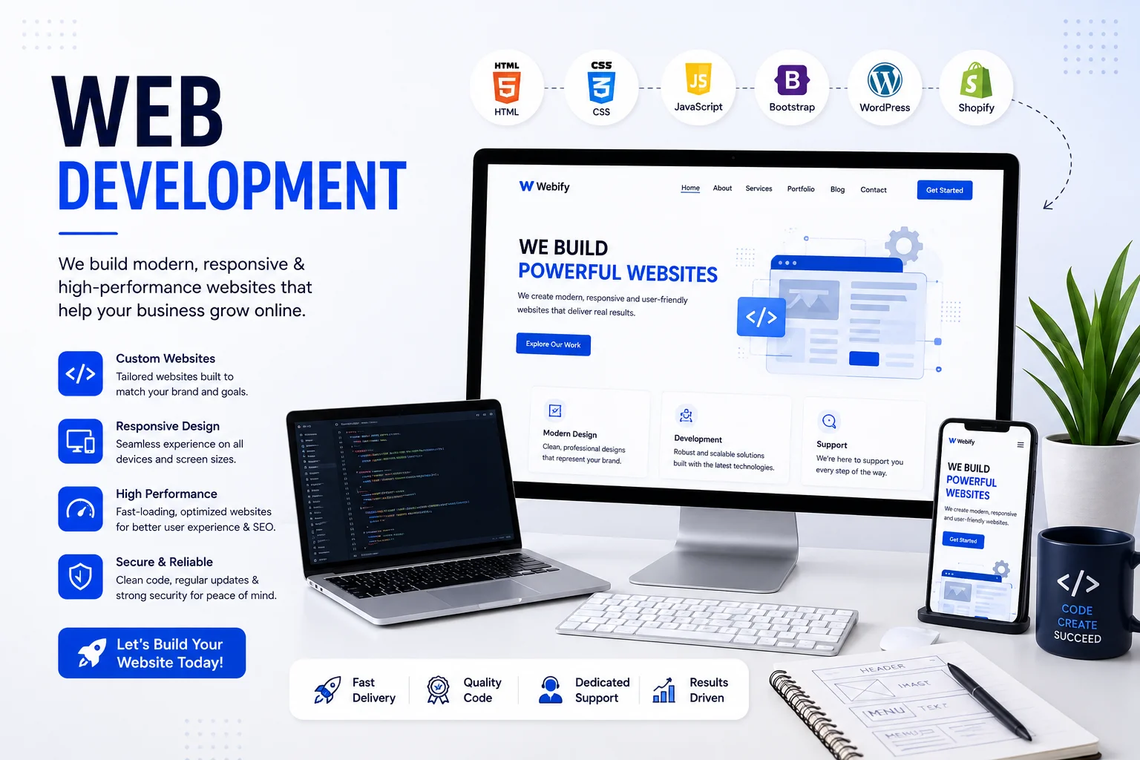
A business website needs to do more than look professional. It should load efficiently, work across devices, communicate clearly, support search visibility, and make it easy for visitors to take the next step. Professional web development services can help businesses build a website around these practical requirements.
Why Web Development Services Matter
Your website is often one of the first places potential customers interact with your business. A confusing navigation system, slow experience, or unclear call to action can make it harder for visitors to find information.
Web development services can address the technical and functional side of a website while supporting the business’s broader marketing objectives. Development should work together with design, content, SEO, analytics, and conversion goals.
Building a Website Around Users
User experience begins with understanding what visitors need. A service website should make core information easy to find, including services, benefits, pricing information where appropriate, contact options, and frequently asked questions.
Navigation should be logical and consistent. Clear page structures help visitors move from initial research toward an action such as submitting a form, calling the business, booking an appointment, or requesting more information.
Mobile-Friendly Development
Many users access websites from smartphones. Responsive development allows layouts and content to adapt to different screen sizes.
Mobile usability includes more than making a page fit a small screen. Buttons should be easy to tap, text should remain readable, forms should be manageable, and important information should not be hidden behind unnecessary steps.
Website Performance and Technical Quality
Performance affects user experience. Large media files, inefficient scripts, unnecessary plugins, and poorly optimized code can contribute to slower loading.
Technical development should consider page speed, security, accessibility, clean site architecture, and maintainability. A well-built website can also make future updates easier.
SEO-Friendly Website Development
Development and SEO are closely connected. Search engines need to crawl and understand website content. Technical foundations such as logical URLs, appropriate headings, internal links, mobile usability, and accessible page structures can support organic visibility.
A development team should also consider how content will be managed. A flexible content management system can make it easier for a business to publish new pages and update existing information.
Integrating Marketing and Conversion Goals
A website should support the marketing channels that bring visitors to it. Organic search, paid advertising, social media, email, and referral traffic may all lead users to different pages.
Landing pages should provide a clear connection between the visitor’s intent and the business’s offer. Strong calls to action can guide users toward meaningful next steps without creating unnecessary friction.
Choosing a Web Development Partner
When selecting a development provider, consider communication, technical experience, project planning, responsiveness, and post-launch support. It is also useful to clarify how the website will be maintained and updated after launch.
GenZyLink Pro provides web development solutions focused on creating functional, marketing-ready websites. Explore its web development services to learn more.
Conclusion
Professional web development services can provide the technical foundation for a website that supports users and business goals. With responsive design, performance optimization, SEO-friendly architecture, clear navigation, and conversion-focused functionality, a website can become a stronger part of an overall digital strategy.
A Practical Approach to Long-Term Growth
A website and its marketing channels work best when they are treated as connected parts of one customer journey. Businesses can start with clear goals, establish useful processes, measure meaningful results, and improve based on evidence. Consistent work across the right channels can strengthen visibility while keeping the customer experience at the center of the strategy.
Regular review also helps businesses identify new opportunities, update outdated information, and keep their online presence aligned with changing customer needs.
Regular review also helps businesses identify new opportunities, update outdated information, and keep their online presence aligned with changing customer needs.
Regular review also helps businesses identify new opportunities, update outdated information, and keep their online presence aligned with changing customer needs.
Regular review also helps businesses identify new opportunities, update outdated information, and keep their online presence aligned with changing customer needs.
Regular review also helps businesses identify new opportunities, update outdated information, and keep their online presence aligned with changing customer needs.